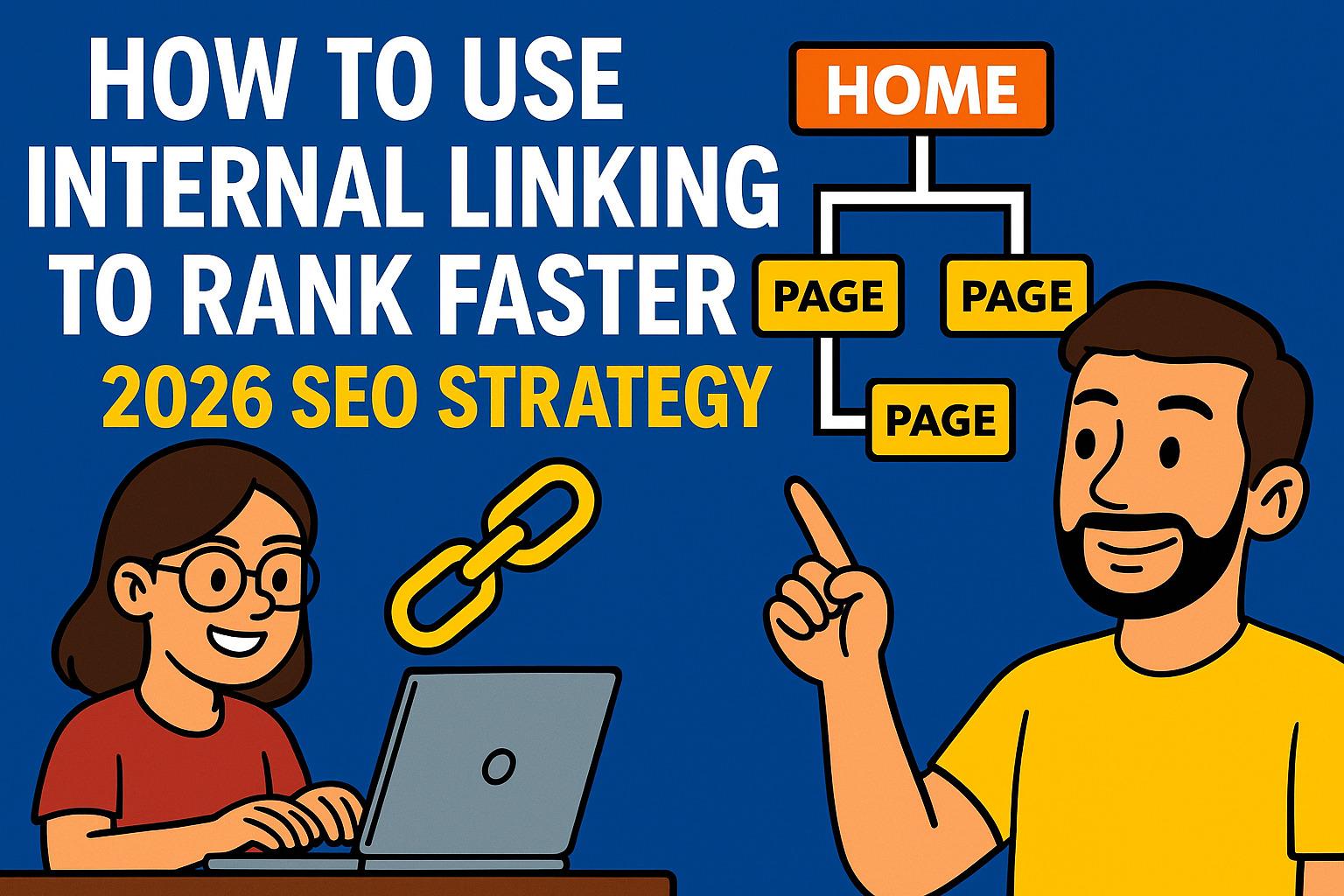


When it comes to improving your website’s SEO, everyone talks about backlinks, keywords, and content quality — but one crucial factor often gets ignored: internal linking. Internal links are the secret SEO weapon that can transform how Google understands your site and how your visitors experience it.
In this article, we’ll explore how internal links help in Google rankings, why they’re vital for your website’s success, and how you can strategically use them to boost your search visibility.
What Are Internal Links?
An internal link is a hyperlink that connects one page of your website to another page on the same domain.
For example, if you have a blog post about “How to Rank a New Website on Google” and you link it to your “Backlink Services” page, that’s an internal link.
They differ from external links, which point to other websites. Internal links help users and search engines navigate your site better.
Simple Example
If your website is like a city, your web pages are the buildings, and internal links are the roads that connect them. Without these roads, both users and search engines would get lost.
Why Internal Links Matter for Google Rankings
Google’s algorithm relies heavily on links — both external and internal — to discover, crawl, and rank web pages. Here’s how internal links play a big role in improving your Google rankings:
1. Helps Google Crawl Your Website Efficiently
Google’s bots (also known as crawlers or spiders) move through links to find new pages.
If a page on your site isn’t linked internally, Google might never find it, which means it won’t appear in search results.
By strategically placing internal links, you make it easier for Google to:
Discover all pages on your site.
Understand which pages are important.
Keep your site regularly crawled and indexed.
2. Passes Link Equity (Ranking Power)
Every webpage has a certain amount of link equity or “SEO juice.” When you add an internal link from a high-authority page to another, you pass some of that equity.
For example, if your “Home” page ranks well and has strong authority, linking from it to a newer article gives that page a ranking boost.
In short, internal linking distributes your ranking power across your site, helping multiple pages perform better in search results.
3. Improves User Experience (UX)
SEO isn’t just about algorithms — it’s also about people.
Internal links help users easily find related content, stay longer on your site, and engage more deeply with your brand.
A well-structured internal linking system:
Decreases bounce rate.
Increases average session duration.
Boosts conversions by leading users to key pages (like services or sign-ups).
When users stay longer and explore more pages, Google interprets that as a positive ranking signal.
4. Helps Build a Logical Site Structure
Google loves websites that are organized and structured clearly. Internal links show search engines how your pages are connected and which ones are most important.
This structure helps Google build a hierarchical map of your site, identifying:
Main (pillar) pages.
Supporting (cluster) pages.
This concept is known as a topic cluster, and it’s powerful for ranking in competitive niches.
5. Boosts the Visibility of Low-Traffic Pages
Every website has pages that don’t get enough traffic. Maybe they’re new or not well optimized.
Internal linking gives those pages a visibility boost by connecting them with popular or high-ranking pages.
When your strong pages link to weaker ones, they pass authority and help those underperforming pages rank higher faster.
Best Practices for Internal Linking
Let’s look at how you can effectively use internal links for SEO success.
1. Use Descriptive Anchor Text
Anchor text is the clickable text of a link.
Avoid generic phrases like “click here” or “read more.”
Instead, use keyword-rich and descriptive text like:
“Learn more about our affordable backlink building services starting at ₹99.”
This tells both users and Google exactly what the linked page is about.
2. Link to Relevant Pages
Make sure the pages you link together are contextually related.
If your blog is about “SEO strategies,” link it to another article about “keyword research” or “on-page optimization,” not to something irrelevant like “eCommerce packaging.”
Relevant linking increases topic authority and keeps users interested.
3. Prioritize Important Pages
Don’t waste internal links on pages that don’t matter (like “Privacy Policy” or “Terms of Use”).
Focus on pages that you actually want to rank, such as:
Service pages
High-quality blogs
Affiliate or product pages
Landing pages for conversions
4. Maintain a Balanced Link Depth
If a page is more than three clicks away from the homepage, Google might consider it too deep and less important.
Try to make sure every important page is reachable within two to three clicks from your homepage.
5. Use a Consistent Linking Strategy
Don’t overdo it or underdo it.
As a rule of thumb:
Add 2–5 internal links per 1000 words of content.
Ensure each link adds value for the reader.
Remember, the goal is user benefit first, SEO second.
6. Add Internal Links to New Content
Whenever you publish a new blog, revisit your older blogs and link to it from relevant places.
This not only helps with indexing but also builds strong topical connections across your site.
7. Use Tools to Audit Internal Links
Tools like Ahrefs, Screaming Frog, or Google Search Console can help you analyze internal link structures.
They can show:
Pages with too few or too many internal links.
Broken internal links.
Pages that are orphaned (not linked internally).
Fixing these issues can give your SEO a quick win.
How Internal Links Affect Google’s Understanding of Your Website
Google’s AI algorithms analyze links to understand context. Internal links help in defining:
What your site is about.
Which topics you cover deeply.
Which pages should rank higher.
For example, if multiple pages link to your “Backlink Services” page using anchor text like affordable backlink packages, Google learns that this page is important for that keyword.
This process strengthens semantic relevance — one of the key ranking factors in Google’s latest algorithms.
Example: Internal Linking in Action
Let’s say you run a digital marketing blog. You have three posts:
“How to Rank a New Website on Google 2026”
“The Importance of Keyword Research”
“How Internal Links Help in Google Rankings” (this post)
By linking these three posts together strategically, you create a content cluster around SEO optimization.
Now Google sees your site as an authority in SEO, increasing the chance that all three posts rank higher collectively.
Final Thoughts
Internal links might not get the same attention as backlinks, but their impact is undeniable. They help Google crawl your site efficiently, distribute link authority, enhance user experience, and improve the overall SEO performance of your entire domain.
If you’ve been focusing only on backlinks or keywords, it’s time to give internal linking the attention it deserves.
Start small — add relevant links within your content today, and watch your rankings and engagement grow over time.
Internal Link Example
You can also check out our detailed guide on How to Rank a New Website on Google 2026 for more insights on optimizing your site structure and backlinks.

Leave a comment
Your email address will not be published. Required fields are marked *